The £40 Lease Simulator: Four Quiet Tuesdays Before the Big Signature
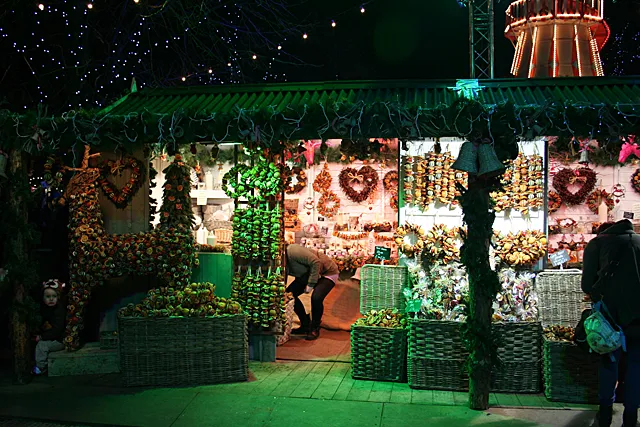
Photo: Anne Burgess , CC BY-SA 2.0, via Wikimedia Commons
There's a moment in every shopfront dream when the spreadsheet starts agreeing with you. Rent is a number, rates are a number, the footfall report from the letting agent is a number — and all of them line up into a tidy little story about how the high street is waiting for you. Then you sign, and the story gets weather, staff sickness, a road closure and a card machine that only works when it feels like it.
A market stall is the cheapest way to meet that weather before it costs you five years. Not as a cute pop-up, not as a marketing stunt, but as a lease simulator with a receipt. Book four Tuesdays. Pay the pitch fee. Take the same stock, the same prices and the same person who will eventually stand behind your counter. Then read what comes back.
Why Tuesday, Not Saturday, Is the Honest Day
Saturday flatters everyone. The town is busy, the market is busy, and half your sales are people buying something to eat while they queue for something else. Tuesday is the day your shop will actually live on. It's the day the high street shows you its baseline: the school run, the pension queue, the bloke who walks the same route to the post office and the woman who is only in town because the dentist finished early.
If your offer works on a wet Tuesday in February, it has a fighting chance on a bright Saturday in June. If it only works when the council is running a food festival, you haven't found a business — you've found a weekend.
Test One: Footfall Isn't a Number, It's a Funnel
Stand at the pitch and count four things for twenty minutes at a time: people who pass, people who slow down, people who touch, people who buy. Don't rely on a general sense of busyness. Use a tally counter on your phone or a scrap of paper. The numbers don't need to be scientific; they need to be yours.
What you're looking for is the drop-off between passing and pausing. A shopfront can survive low footfall if enough people stop. It cannot survive high footfall if nobody looks. If two hundred people walk past and three slow down, your problem is the display, the sign or the category — not the location. If thirty pass and twelve stop, you may have a niche that a small unit can serve, provided you can find the right street.
Also note the direction of travel. People behave differently on the way into town and on the way home. Your shop might catch the morning trade and miss the afternoon entirely. The stall will show you which side of the pavement you want.
Test Two: Watch the Flinch, Not the Sale
Take three price points to the pitch: your intended price, one ten per cent lower, and one bundled offer. Don't ask people whether they'd pay it. Ask them to pay it, then watch the face. The flinch is data. The polite nod is not.
Record the number of people who pick something up, ask the price and put it back. That's not a rejection of your product; it's a signal about context. A £25 candle might be an easy yes in a gift shop with warm lighting and a carrier bag, and a hard no on a trestle table next to a van selling potatoes. If the flinch comes before the price, it's presentation. If it comes after, it's positioning.
Keep a note of basket size, too. A stall that sells one item at a time tells you something different from one where people buy two and ask for a bag. The second is a shop. The first is a stall with a queue.
Test Three: The Third-Week Nod
Four Tuesdays give you something a single day can't: a repeat window. Week one is curiosity. Week two is a second look. Week three is where the nod starts — the person who bought last week and comes back to tell you they used it, or to ask for the thing you'd run out of. Week four is where you learn whether your name is sticking.
Write down first names if people offer them. Note what they ask for that you don't stock. If the same request comes up three times, that's not a customer being difficult; that's a buying signal with a receipt. If nobody comes back, the product may be fine but the pitch is wrong — or the town has enough of that thing already.
Repeat faces are also your first warning about staff. If the same three people do all the talking because you're busy, you're already designing a rota in your head. That's useful. It's cheaper to discover that on a stall than in a shop with a notice period.
Test Four: Can You Walk Away for Ten Minutes?
This is the test most people skip. On one of the Tuesdays, leave the pitch for ten minutes. Go and get a coffee. Watch from a distance. Can someone buy without you? Is the pricing clear? Is the card reader visible? Is there a queue that forms and dissolves without drama?
If you can't leave, you haven't tested a shop — you've tested a market stall with you attached. A shopfront needs a selling system: signage, a till, a card reader, a way to handle a queue, a policy for refunds, and a person who can answer the same question you answer forty times a day. The stall will show you which parts of that system you haven't built yet.
It will also show you what a member of staff actually costs you in attention. If you need a mate to cover a toilet break, that's a wage line. If you need two people at the busiest half-hour, that's a rota. If you can run it alone on a quiet Tuesday with a flask and a radio, you've found your minimum viable shop.
Turning Pitch Maths Into Lease Maths
Here's where the £40 pitch fee earns its keep. Take your Tuesday takings and subtract the pitch fee, the stock cost, the card fees and the travel. What's left is a rough contribution. Now compare it to the daily cost of the shop you're considering: rent divided by trading days, business rates, service charge, insurance, utilities, waste, alarm, and the wages you'd need to cover the hours you can't be there.
You don't need a perfect model. You need a sanity check. If a quiet Tuesday on a stall produces £120 contribution and the shop needs £180 a day before you've paid yourself, you have a problem that a busy Saturday might hide for six months and then hand back to you as a break clause.
The point isn't to prove the shop will fail. It's to find out what has to be true for it to work. More footfall? Better margin? A second product line? Longer hours? The stall gives you a place to test those assumptions cheaply, in public, with real money changing hands.
The Bit Nobody Tells You About Booking a Pitch
Ring the council's market officer rather than filling in a form and hoping. Ask what's included, whether you need public liability insurance, whether there's a gazebo or table, where the van can park, and what happens if it rains. If you're selling food or drink, check the food hygiene registration and the rules on sample-giving before you turn up with a cool box.
Take a float, a card reader, a battery pack, a tarpaulin and a notebook. Take fewer products than you think. The stall is not a shop; it's a stress test. You want to come away with numbers and a list of questions, not a van full of unsold stock and a bad back.
What the Stall Can't Tell You
A market is not a high street. It has its own rhythm, its own regulars and its own permission to be scruffy. A good Tuesday doesn't guarantee a good lease, and a bad Tuesday doesn't always mean the shop is wrong. What the stall can tell you is whether you can sell in the open, at your prices, to people who didn't come out to find you. That's most of the job.
Sign the lease when you can point to four Tuesdays and say what they taught you. Not because the spreadsheet says yes, but because you've already met the flinch, the repeat face and the ten minutes when nobody was watching. A £40 pitch fee is cheap tuition. A five-year signature is an expensive guess.