Your Landlord Sent a Number, Not a Story: Reading the January Service Charge Demand
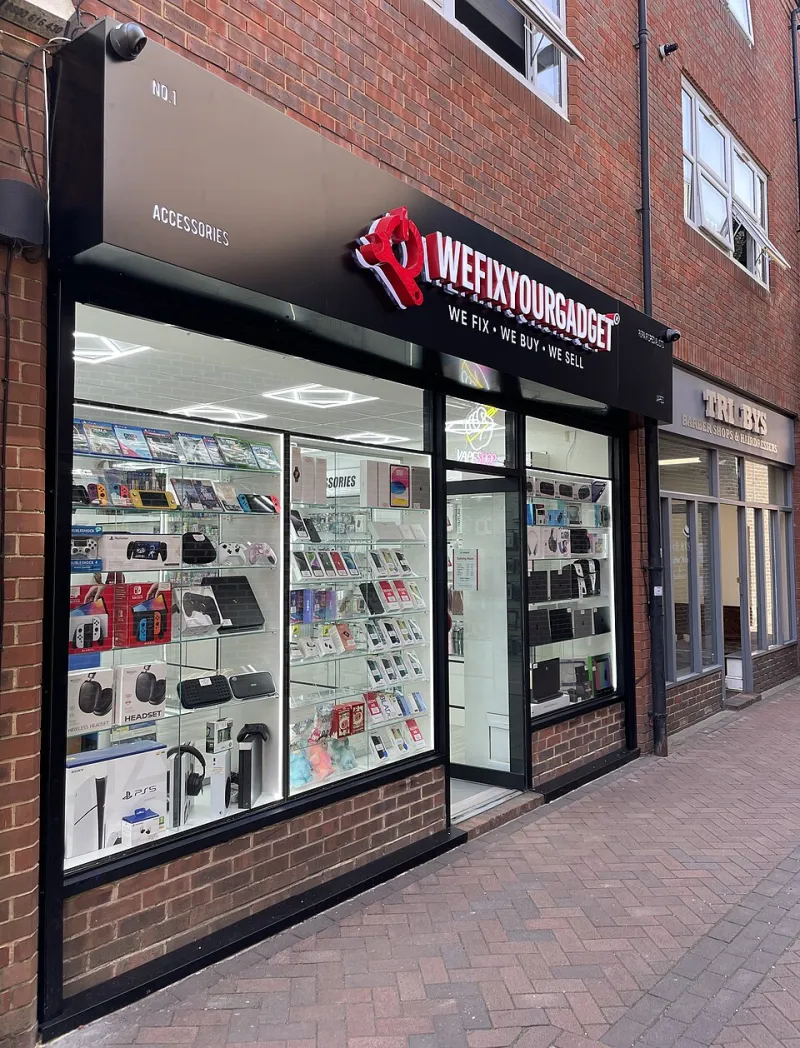
Photo: Mr Ignavy , CC BY-SA 2.0, via Wikimedia Commons
January has a habit of delivering a PDF with a number on it. If you rent commercial premises, that number may be your service charge reconciliation: the annual settling-up of what the landlord spent versus what you already paid on account. Sometimes it is neat and well explained. Sometimes it is a total, a payment deadline and a vague promise that everything is in order.
You should pay what you legitimately owe. But a service charge demand is not a bill in the same way as a gas invoice. It is a set of claims about costs, shares and works. Before you transfer a penny, spend ten minutes turning the demand into a paper trail. Not to dodge your obligations — to make sure the story matches the sum.
Start with the budget, not the bottom line
The first thing to ask for is the budget-to-actual comparison, line by line. You want to see what was estimated at the start of the service charge year, what was actually spent, and where the differences sit. A reconciliation that only shows a total is like a bank statement with one figure on it.
Look for the usual suspects: cleaning, security, repairs, utilities, insurance, management. If a line has jumped sharply, ask what changed. Was it a one-off repair? A new contract? A reclassification from another heading? You do not need a forensic accountancy exercise. You need a sentence of explanation for anything that looks out of step. If the landlord cannot explain a variance, that is worth querying before payment, not after.
The management fee should buy management
Management fees are easy to gloss over because they often look small next to repairs and insurance. Check how the fee is calculated. Is it a fixed sum, a percentage of total expenditure, or a percentage of your share? If it is a percentage, does it apply to the budget or the actual spend? And does it include services that are already being billed separately?
A reasonable management fee is part of the deal. A fee that quietly rises because total expenditure rose — without any change in what is being managed — deserves a question. Ask for the basis of the fee and whether it has changed from last year. If the answer is “it is in the lease”, ask for the clause. If the answer is “it is standard practice”, ask for the calculation. You are not being difficult. You are checking the arithmetic.
Reserve funds are savings, not a slush fund
Many commercial service charges include a contribution to a reserve or sinking fund for future works. That is sensible. Roofs do not last forever. But a reserve fund should have a visible balance and a plan.
Ask for the reserve fund schedule: opening balance, contributions in, money spent out, closing balance. Then ask what the fund is for and when the landlord expects to spend it. If you are paying into a reserve with no schedule and no planned works, you are entitled to ask why. If major works are coming, the reserve may be perfectly proper — but you should still see how your contribution has been calculated and whether previous reserves have been used as intended.
Apportionment: check your share against the floor plan
Your service charge is usually a proportion of the total cost. That proportion might be based on floor area, rateable value, a fixed percentage in the lease, or another method. Check the lease. Then check the denominator.
Is your share based on the total lettable area of the building, or only occupied units? Has a new unit been added? Has the building been remeasured? Are there excluded areas that should not be in the calculation? If your percentage has changed, ask why. A small shift in apportionment can be more expensive than a dramatic-looking repair line, because it applies across every cost in the service charge.
Evidence of works: follow the invoice trail
You do not need to see every receipt for every lightbulb. But for significant items, you should be able to see enough to link the cost to the property and the period. Ask for a summary of works and redacted contractor invoices where needed. Check dates. Check whether the same job appears twice under different headings. Check whether something looks like a capital improvement rather than a repair — because capital works may belong in a different pot or require a different conversation.
Be practical here. A landlord is unlikely to hand over a full procurement file, and you probably do not want to read it. Ask for evidence proportionate to the cost. If a line is large and unexplained, that is the one to query. If it is small and clear, let it go. The point is not to audit the entire building. The point is to satisfy yourself that the big claims are real.
How to challenge without turning it into a fight
Put your query in writing, itemise it, and keep the tone boring. Something like: “Thanks for the reconciliation. Before I settle the balance, could you clarify these three lines and confirm the apportionment basis? Happy to jump on a call if that is easier.” That is a world away from accusing anyone of anything.
Check your lease for the payment deadline and any dispute process. In some cases you may need to pay undisputed amounts while querying the rest; in others the lease sets out a different route. If the sum is significant, take proper advice. The RICS service charge code is a useful reference point for commercial transparency, but your lease is the document that matters most.
And keep the relationship in mind. Landlords and tenants in a town centre tend to meet again. A clear, calm query with a paper trail is easier to answer than a withheld payment and a cold email. If the demand is right, the exercise takes ten minutes and you pay with confidence. If it is not, you have caught it before the money left your account. That is the NLB Forum version of a January audit: less drama, better paperwork.