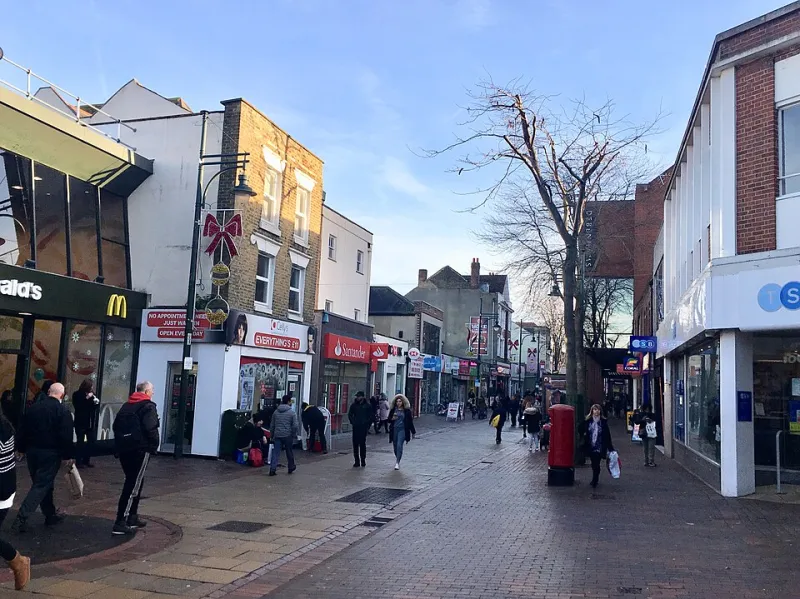
The Van Driver Saw It First: A Ten-Minute Monthly Read on Your Local Patch
Photo: Francisclarke, CC BY-SA 4.0, via Wikimedia Commons
Your CRM is very good at telling you what has already happened. It knows who bought, who enquired, who went quiet. What it cannot tell you is that the unit two doors down has had its shutters up for a fortnight, that the loading bay on the side street is now a digger park, or that three regulars have started getting deliveries from a new place on the retail park.
The people who know that stuff are not sitting in a dashboard. They are in vans, on foot, and at the back doors of your local businesses every day. Couriers, cleaners, delivery drivers, maintenance crews — the frontline lot. They see the street at 7am and 4pm, in the rain, when the rest of us are staring at a screen.
This is not about turning your delivery driver into a private investigator. It is about a small, regular habit: ten minutes a month, a few plain questions, and a notebook that stops local changes from arriving as a surprise in your sales figures.
Why the frontline sees it before the spreadsheet
A drop in takings is a lagging indicator. By the time it shows up in your accounts, the cause has usually been kicking around for weeks. Maybe a road closure has made your end of town a pain to reach. Maybe a nearby employer has changed shift patterns. Maybe a competitor has started doing click-and-collect from a unit that was empty in the spring.
Couriers and cleaners pick up on these things because their day is built around access. They know which gates are locked, which streets are snarled up, which units are getting lots of parcels and which have gone suspiciously quiet. They are not analysing it. They are just noticing. Your job is to catch the useful bits before they evaporate.
The ten-minute monthly routine
Keep it small enough that you will actually do it. Once a month is plenty. Pick a quiet Tuesday or the first Friday, put ten minutes in the diary, and treat it like a mini stock check.
1. Pick three people on your patch. Not a big research panel. Three is fine: the courier who does your street, the cleaner who does the shared yard, the driver who drops to the industrial estate. If you are on a high street, add the person who empties the bins or does the morning delivery run. Vary them over time so you are not leaning on one person.
2. Ask four plain questions. Keep them factual and easy to answer:
- What has changed on your rounds this month?
- Any access problems worth knowing about — roadworks, parking, loading bays, locked gates?
- Have any units or businesses gone quiet, got busier, or changed hands?
- What are customers asking you for that they cannot seem to get locally?
That last one is often the most useful. Drivers hear the raw version of demand: people asking where to get a key cut, a parcel returned, a sandwich after 2pm, a van hired at short notice.
3. Write down only what you can use. One line per point: date, what was said, which part of your patch it affects. No names unless you genuinely need them. No speculation about why someone's marriage is in trouble or which landlord is skint. Just the operational facts.
4. Do one small thing. The habit only earns its keep if it changes something. If the driver mentions that the side street is closed for six weeks, ring your regulars and tell them the best way in. If two units have gone quiet, walk past and have a look. If people keep asking for a service you could offer, price it up. One action is enough.
What to ignore
This is where a useful habit can turn into a waste of time — or worse, a gossip network with a clipboard.
Ignore anything about named individuals that is not directly relevant to access, safety or trading. Ignore one-off grumbles: every street has a bad Tuesday. Ignore "everyone says" without a specific example. Ignore landlord rumours unless they affect your lease, your neighbours' footfall or your ability to trade. And ignore the temptation to repeat what you have heard. The moment a courier thinks you are going to blab, the useful information stops.
Treat the input as early warning, not evidence. A driver saying a unit looks empty is a prompt to check, not a reason to ring your accountant. Cross-check anything that matters against your own bookings, invoices or a quick walk down the street.
Keep it clean and reciprocal
You are not interrogating anyone. Ask while helping, or while signing for a parcel. Keep it conversational. If someone flags a problem with your own premises — bins blocking the alley, a gate that sticks, a sign that is confusing — fix it. That is the trade. They give you a bit of local sight; you make their round slightly easier.
It also helps to say what you are doing with the information. "I am trying to keep an eye on the street so I am not caught out" is a perfectly normal thing to say. It is not weird. It is what a lot of owners already do informally, just without the ten-minute structure.
The point is not gossip — it is a diary
After three or four months you will have a scruffy but genuinely useful log: when the roadworks started, when the new unit opened, when the parcel volumes shifted, when the parking situation changed. That is local intelligence in the plainest sense. It sits alongside your sales figures and tells you why they moved.
You do not need software for this. A notes app is fine. A page in the back of a diary is fine. The value is in the rhythm: same time each month, same four questions, one small action. Ten minutes. Before the spreadsheet catches up.