Ten Conversations, Six Streets: Working Out How Far Your Good Name Actually Goes
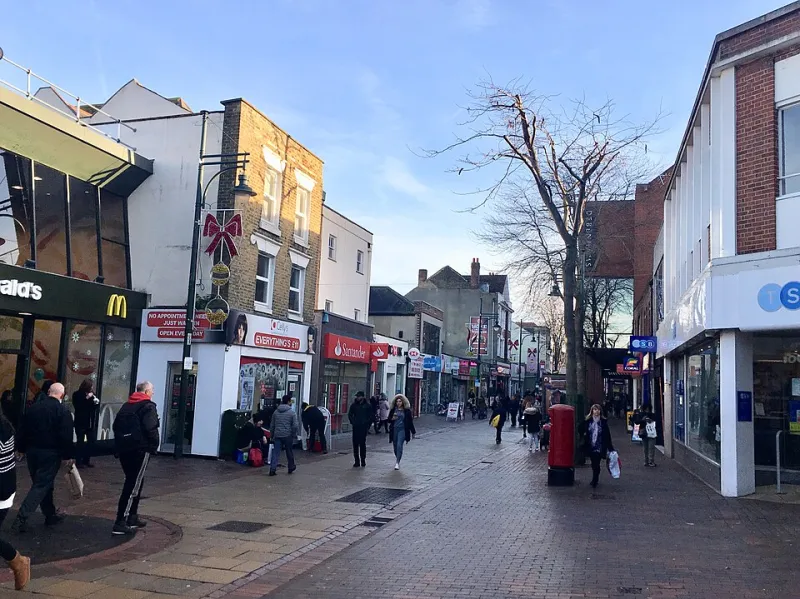
Photo: Chris Whippet , CC BY-SA 2.0, via Wikimedia Commons
Every owner I've spoken to this year reckons their reputation is solid. And they're usually right — inside a half-mile bubble. Step two streets beyond it and you're a stranger with a nice sign.
That gap between known and known of is where most local marketing money gets wasted. Not because ads don't work, but because people buy ads before they've done the free bit: finding out where their name already lands.
This is a two-evening job. No agency, no dashboard, no new networking group.
Start with ten, not a survey
You need ten people. Six customers, four suppliers or professional contacts — ideally a mix of long-standing and recent. Don't send a form. Ring them, or ask over a coffee, and use three questions in this order:
- Where did you first hear about us? Push past "oh, I just knew" — ask what they were doing that day, who mentioned us, whether it was online or in person.
- Roughly where were you living or working when that happened? A street name or a landmark is enough.
- Who else do you know round there that we should be talking to?
The third question is the one people forget, and it's the one that pays. You're not just auditing, you're planting.
Two things will happen. First, you'll discover that "word of mouth" usually means one of four or five specific people — a plumber, a school gate conversation, the bloke who runs the café on the corner. Second, you'll find at least one customer who genuinely cannot remember how they found you, which is its own kind of answer.
Note the answers down verbatim. Vibes don't survive contact with a spreadsheet.
Draw the radius, street by street
Now get a paper map or a printout of your local area — a proper one, with street names, roughly a two-mile square around your premises. Mark a dot for each answer. Then mark, in a different colour, the home or site of every customer you've served in the last twelve months.
The pattern is usually brutal and clear:
- A dense cluster within a few streets of your base or your main referrer.
- A thin scatter along two or three arterial roads — the routes people drive, not the ones they live on.
- A blank zone behind you, often only a quarter of a mile away, where recognition drops to nothing.
That blank zone is your reputation radius boundary. It is also, almost always, where the cheapest growth is.
A quick word on what counts as evidence. If someone says "I've seen your van about", that's visibility, not reputation. If they say "Dave at the tyre place said you'd sort it", that's reputation. Only the second one travels on its own. Visibility needs a nudge.
Three moves that cost almost nothing
Pick three. Not five. Three is a quarter's worth of effort for one person.
1. Ask for a named introduction, not a referral. "If you know anyone who needs this, send them my way" produces a warm feeling and nothing else. "Is there one person on your street who's been putting off [the exact problem you solve]? Would you mind mentioning me next time you see them?" produces a name. Follow up within the week, and thank the referrer either way — a text is fine, a box of something nice at Christmas is better.
2. Go where the boundary is, not where the crowd is. If your blank zone is the estate behind the retail park, don't join another business breakfast in the town centre with the same twelve faces. Sponsor the raffle at the school fete on that estate. Take a stall at the church hall table-top sale. Put a half-page in the parish magazine, which in many areas still gets read cover to cover by exactly the demographic that owns houses and pays promptly.
3. Make the van, the door and the invoice do the work. Cheapest reach you own is the stuff already moving around. A phone number big enough to read from a pavement. A line on the invoice footer: We're based on [street] — if we've done a good job, tell one neighbour. Sounds naff. It works, because it's specific and it's easy to action.
What to ignore while you're doing this
Don't buy ads to fix a radius problem. Ads buy attention in places where you have no credibility yet; word of mouth buys credibility in places where you already have attention. Fix the second one first — it's free and it compounds.
Don't join another group either. If you're already in two, you've got the network. What you're short of is use of it.
And don't confuse social media reach with local reach. A post seen by 3,000 people across the county is worth less to a domestic electrician than being the named sparky in a WhatsApp group of forty households on three streets.
The six-month check
Re-run the ten questions in May. You're looking for two shifts: the average distance between your premises and where people first heard of you should have grown, and at least two of the new answers should trace back to someone you asked in November.
If neither has moved, you didn't do the three actions. That's not a marketing failure, it's a diary failure — which is a much easier thing to fix.
One last thing. Keep the map. Stick it on the wall by the kettle. It's the most honest piece of market research you'll ever own, and it cost you ten phone calls and a bottle of something for the person who drew the dots.